
Email Marketing
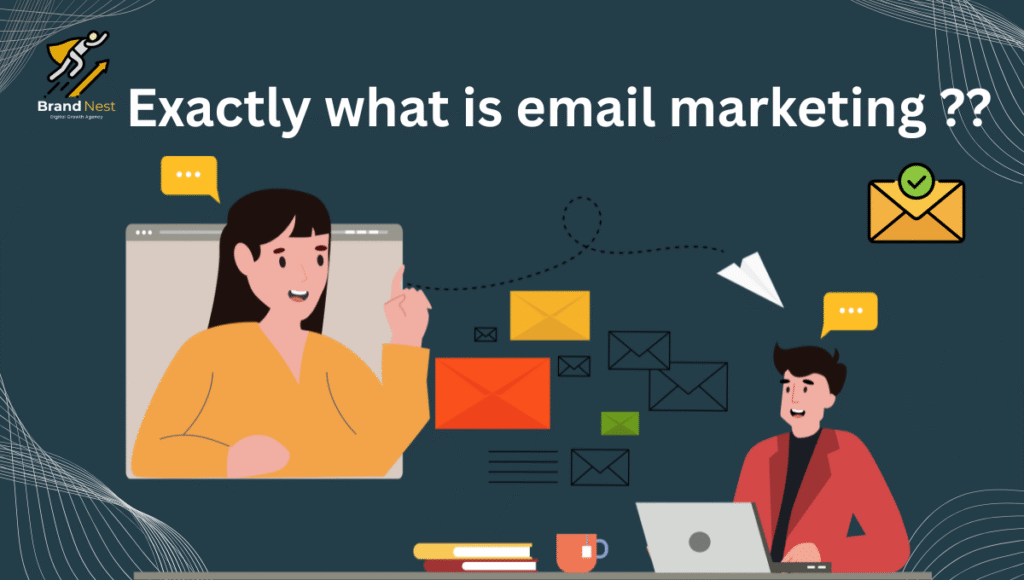
Email marketing is a strategic digital marketing approach that involves sending targeted, personalized messages to a group of recipients via email. It is primarily used by businesses, organizations, and professionals to communicate with their audience, promote products or services, build relationships, and increase brand awareness. Unlike generic advertising, email marketing allows for highly segmented and data-driven campaigns, enabling marketers to reach specific customer demographics with tailored content.
The effectiveness of email marketing lies in its ability to provide direct communication, measurable results, and high return on investment (ROI). Key techniques include newsletters, promotional offers, transactional emails, and automated sequences. By leveraging analytics and tracking metrics such as open rates, click-through rates, and conversion rates, marketers can optimize campaigns to enhance engagement and drive customer action.
Furthermore, email marketing emphasizes permission-based communication, meaning recipients have voluntarily subscribed to receive messages. This fosters trust and reduces intrusive marketing practices, making it a vital tool for sustaining long-term customer relationships. With the evolution of digital tools, email marketing has become more sophisticated, incorporating automation, personalization, and integration with broader marketing strategies to maximize business outcomes.
ConvertKit as an Email Marketing Tool
ConvertKit is a robust email marketing platform specifically designed for creators, entrepreneurs, and small businesses seeking to streamline their digital communication efforts. Unlike traditional email marketing tools, ConvertKit focuses on simplicity, automation, and subscriber-centric management, allowing users to design, execute, and analyze campaigns efficiently.
At its core, ConvertKit provides an intuitive interface that enables users to manage subscribers, segment audiences, and create automated email sequences. Unlike platforms that primarily target large enterprises, ConvertKit emphasizes flexibility for individual creators, such as bloggers, podcasters, and online course instructors, enabling them to engage their audience meaningfully. The platform supports customizable sign-up forms, landing pages, and email templates that simplify content creation while maintaining professional aesthetics.
A distinguishing feature of ConvertKit is its advanced automation capabilities. Users can design workflows that trigger emails based on specific subscriber behaviors, such as link clicks, purchases, or form submissions. This behavior-based automation enhances personalization, ensures timely communication, and nurtures leads effectively. For example, a creator can set up a sequence that delivers a free ebook to new subscribers, followed by a series of follow-up emails promoting relevant products or content, all without manual intervention.
ConvertKit also provides comprehensive analytics tools that allow marketers to track email performance, measure engagement, and evaluate conversion rates. Metrics such as open rates, click-through rates, and subscriber growth are easily accessible, enabling data-driven decisions to optimize campaigns. Moreover, its tagging and segmentation system allows precise targeting, ensuring that different subscriber groups receive content tailored to their interests and engagement levels.
Integration capabilities are another strength of ConvertKit. It seamlessly connects with popular platforms such as WordPress, Shopify, Teachable, and various membership or e-commerce systems, enabling creators to centralize their marketing efforts and synchronize data across multiple channels. This integration facilitates a cohesive marketing strategy, ensuring that email campaigns align with broader business objectives.
Additionally, ConvertKit emphasizes compliance with email marketing regulations, including GDPR and CAN-SPAM requirements. By providing features such as opt-in forms, subscription management, and automated unsubscribe options, the platform ensures that marketers adhere to legal and ethical standards while maintaining subscriber trust.
In conclusion, ConvertKit is a versatile, user-friendly, and automation-focused email marketing tool tailored for creators and small businesses. Its strengths lie in simplified campaign management, behavior-based automation, advanced segmentation, analytics, and integrations. By leveraging ConvertKit, marketers can build meaningful relationships with their audience, deliver personalized content efficiently, and achieve measurable business outcomes. In the evolving digital landscape, ConvertKit represents a strategic solution for those seeking to maximize the effectiveness of their email marketing efforts while maintaining creativity and subscriber engagement.